
COLUMNIST
GENERAL U. J. ESUENE: A GIANT WHOSE LEGACY DESERVES GREATER HONOUR AT HOME


GENERAL U. J. ESUENE: A GIANT WHOSE LEGACY DESERVES GREATER HONOUR AT HOME
By Peters Buhari
History is often unkind to those who build the foundations upon which others stand. Brigadier (General) Udoakaha Jacob Esuene (U. J. Esuene) is one such man. An illustrious son of Afaha Eket, he was not merely a military officer or administrator, he was a visionary whose leadership transformed the old South Eastern State and laid much of the developmental foundation upon which present-day Cross River and Akwa Ibom States were built.
Born on 17 October 1936, Esuene rose through the ranks of the Nigerian military and, at just 31 years old, was appointed the first Military Governor of the South Eastern State in May 1967 following the creation of twelve states in Nigeria. He assumed office during one of the most difficult periods in the nation’s history. Imagine being a governor during the Nigerian Civil War when institutions had to be built almost from scratch and a war-ravaged region required purposeful leadership.
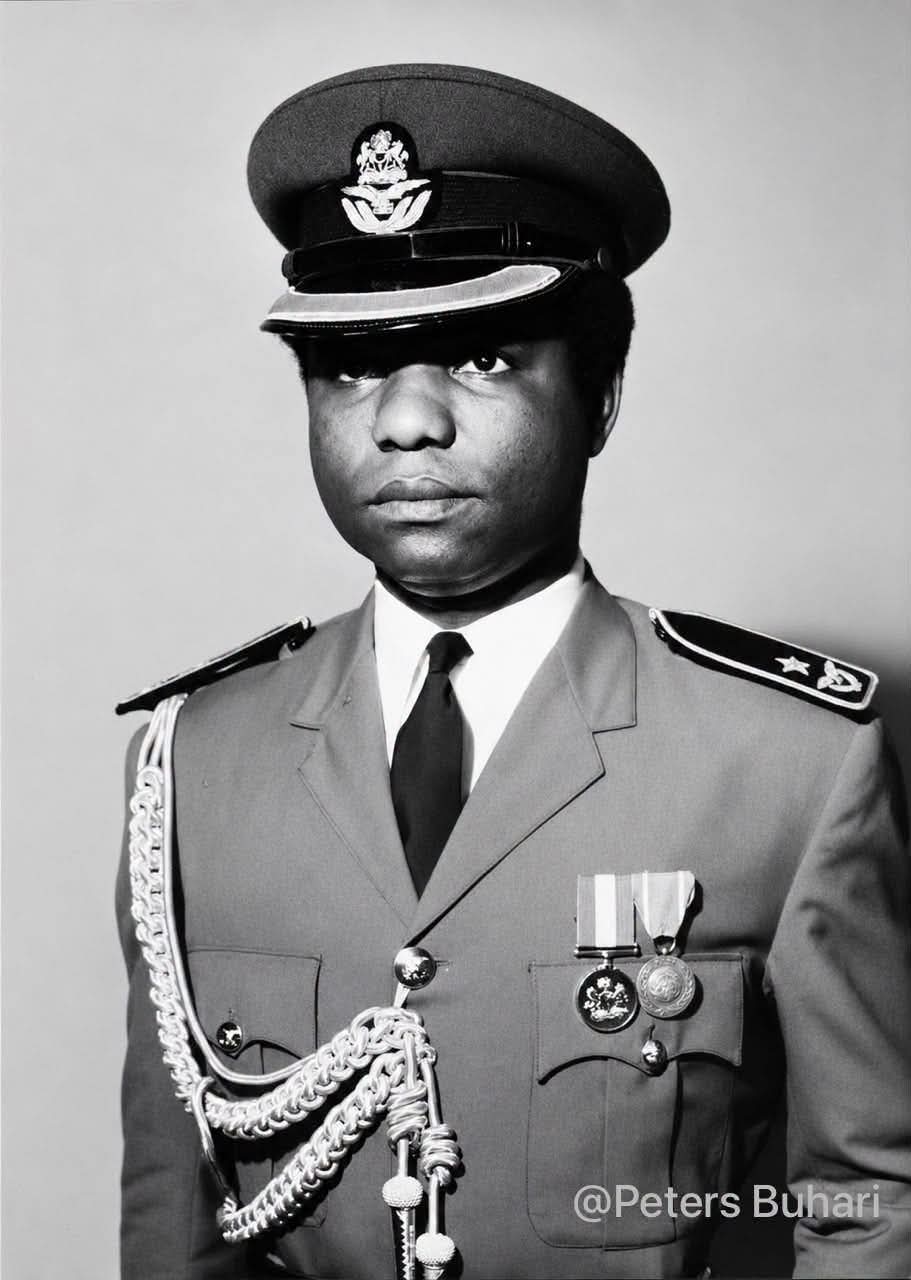
Late Brigadier U. J. Esuene
One of the qualities that distinguished General Esuene was his humility. I recall having an interview with a former Head of Civil Service in Cross River State Mr Wilfred Oden Inah some few years ago in Calabar.
According to him, Gen. Esuene openly admitted that although he was a trained military officer, he lacked civil administrative experience. Rather than pretend to know it all like what we currently have by some of our leaders, he invited seasoned civil servants, including Michael Ani, and appealed to them to teach him how to administer the new state which they did and achieved greatness together.
That rare humility became one of his greatest strengths. He listened, learned and governed with vision.
The result was an administration that still stands as one of the most impactful in the history of the old South Eastern State. Under General Esuene, landmark projects were conceived and executed, including the State Housing Estate, the Calabar–Ikom Highway, the College of Technology (today’s Cross River University of Technology), the Cultural Centre, Calabar, and the U. J. Esuene Stadium. His administration also played a decisive role in the processes that led to the establishment of the University of Nigeria, UNN Calabar Campus, which later became the University of Calabar plus many road projects.
Those are projects that still exists and defines Cross River State and until some other person comes someday and surpasses what Esuene has done, I say firmly that he is the best governor ever produced by the State.
Talking about present-day Akwa Ibom State, we can not forget the role he played in bringing down Mobil producing down here which led to the QIT base, the airstrip and lots more from the company. Qua River hotel once a crown jewel of the Niger Delta’s hospitality sector was built during his administration in 1972 and other infrastructural projects in the State. Even after he left office, he kept on impacting on his people and his region.
For the people of Eket and Akwa Ibom State, General U. J. Esuene should occupy a place of honour among the state’s greatest sons. Yet, one cannot help but ask a difficult question: Has Akwa Ibom State truly honoured one of its finest pioneers?
Outside the road commonly referred to as the Eket–Oron Road despite officially bearing his name and still largely identified by its old description, there is little public recognition befitting a man of his historic stature. Even government communications often continue to call it the Eket-Oron Road, overlooking the honour intended for General Esuene.
Equally telling is the story of his statue at the U. J. Esuene Square. Many including myself assumed it was a government initiative, but it was surprising to discover that his family were they ones that sponsored and erected the monument in that square named after him by the state.
In the whole of Uyo the capital city, what can be used to remember our great son of Ibibio land? Nothing. Absolutely nothing.
It is a sobering contrast. A man whose vision helped shape an entire state is celebrated in Cross River for his enduring developmental legacy, yet in his own homeland, visible symbols of appreciation remain surprisingly few.
So if the former administrations in Cross River State government had yielded to protest from certain sections of the state to change the name of their stadium then it means we wouldn’t have had any major thing bearing the legendary name.
Honouring General U. J. Esuene is not merely about naming streets or erecting monuments. It is also about teaching younger generations that excellence, humility and selfless public service deserve lasting recognition. It is about reminding ourselves that history should not forget those who built before us.
I propose that Eket local government Chairman should declare October 17 every year has *ESUENE DAY* – such a day would not merely be ceremonial. It could become an annual opportunity for lectures in schools, leadership seminars, essay competitions, community service and reflections on the values of patriotism, humility, visionary leadership, and public service that General Esuene exemplified.
If we can dedicate days to celebrating our Masquerades, then surely we can also dedicate one day each year to honouring a son of the soil whose contributions shaped the destiny of an entire state and will inspire future generations to serve with integrity and vision.
The greatest tribute we can pay him is not merely to remember his name, but to preserve his story and ensure that future generations know that one of the finest builders of the old South Eastern State which gave birth to Cross River State was an Ekid son.
A people who fail to honour their heroes while they are gone risk raising generations who no longer believe that service to society will ever be remembered.
✍🏽 Peters Buhari
New Born Journalist