
BUSINESS
IBOM DEEP SEAPORT: TIME TO STOP COMPLAINING AND START INVESTING

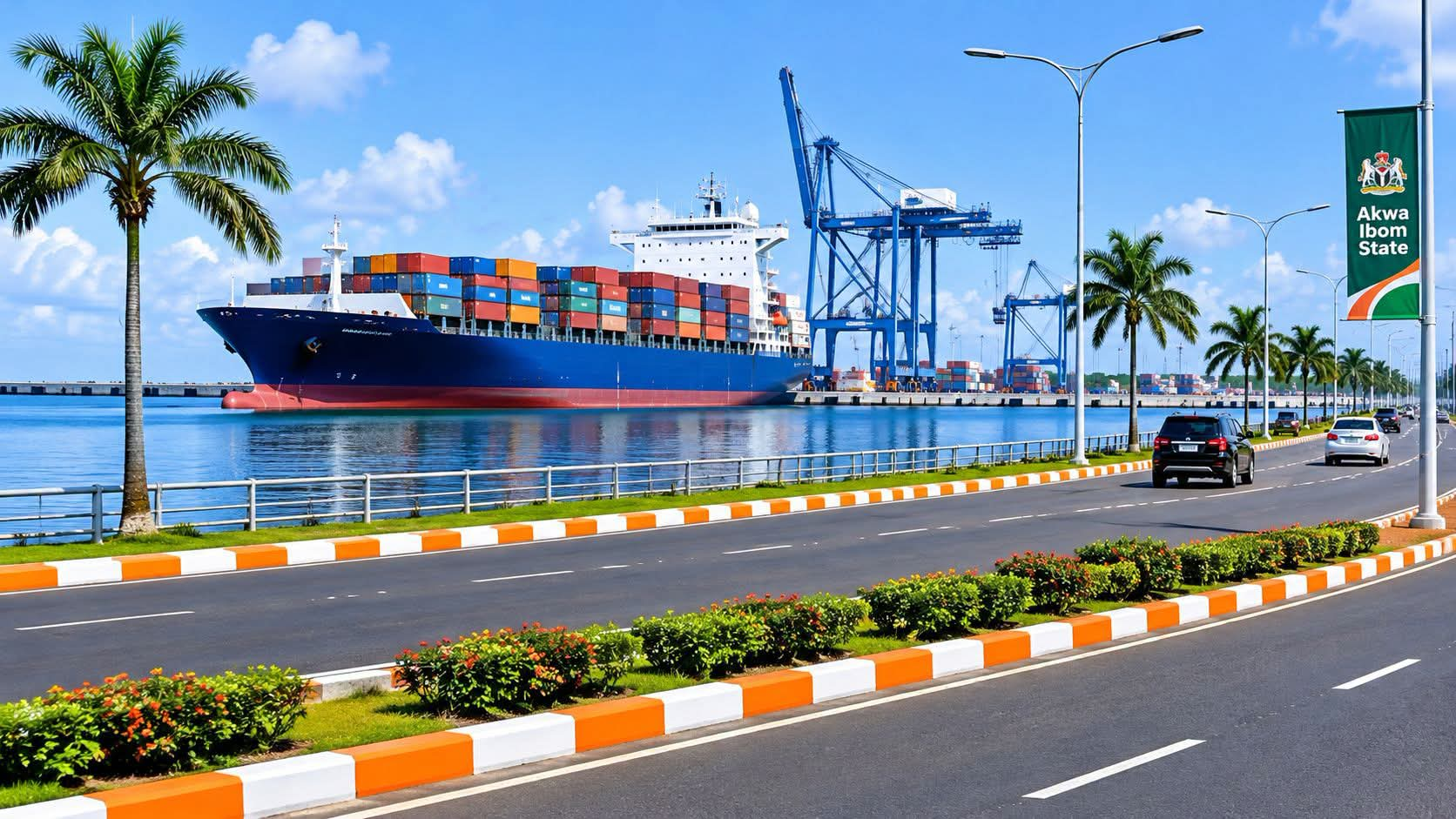
IBOM DEEP SEAPORT: TIME TO STOP COMPLAINING AND START INVESTING
By Nestor Udoh
President Bola Ahmed Tinubu yesterday, November 6, 2026, announced at a working visit to Akwa Ibom that he has “approved” the establishment of the Ibom Deep Seaport in Akwa Ibom State.
For all intents and purposes, and for all that it is worth, this is welcome news.
As it has come from the nuclear centre of Nigerian power, it should call for celebration.
Critics however see the statement as a déjà vu political rant, coming from someone who is just expecting a basketful of votes for his reelection ballot, come January next year.
But beyond the celebrations, the skepticism and the criticisms surrounding the presidential approval, I think it is time for us to ask ourselves a more fundamental question: Must government provide all the money required to build this seaport?
What can the people of Akwa Ibom do to make this dream a reality?
Let us first appreciate the journey so far.
The idea of a deep seaport was conceived during the administration of Obong Victor Attah (1999–2007), as part of his vision of transforming Akwa Ibom into an industrial and investment destination.
The administration of Chief Godswill Akpabio (2007–2015) carried the vision forward. The project remained part of the state’s development aspirations and the groundwork for its eventual realisation continued.
Governor Udom Emmanuel (2015–2023) gave the project considerable technical and administrative attention. His government established a technical committee, engaged international transaction advisers, pursued the necessary federal approvals to develop the project through the Public-Private Partnership (PPP) framework.
Under him, the Federal Executive Council subsequently approved the Full Business Case in December 2020, with a preferred investor consortium emerging from the procurement process.
Governor Umo Eno has continued from where his predecessors stopped.
His administration has funded further feasibility studies, geotechnical investigations, investor engagements, access-road development and other preparatory activities.
The presentation of the updated feasibility report in April 2026 was another significant step.
President Tinubu’s announcement yesterday may provide fresh political impetus to the project.
But we must, however, appreciate that presidential approval is not the same as having the entire construction financing in place.
Now, how do other countries finance their deep seaports?
An important lesson from international experience is that governments do not necessarily have to finance and operate entire seaports.
The Port of Rotterdam in the Netherlands, for example, operates substantially under a landlord-port arrangement.
Government retains public ownership and regulatory responsibilities, while private companies lease port facilities, invest in terminals and equipment, and conduct commercial operations.
Singapore has also developed a strong port system through substantial private-sector participation.
Closer home, Lekki Deep Sea Port in Lagos demonstrates what private-sector-led financing can achieve.
The project, estimated at approximately $1.5 billion, was driven principally by private investors, including the Tolaram Group and China Harbour Engineering Company, with government participation and regulatory support.
For me, the lesson is simple: Government can create the enabling environment without carrying the entire financial burden on ports construction.
So, what do we do as a people?.
Akwa Ibom people did not wait for pronounced approvals from a president to develop a world class airport and establish Ibom Air, the best airline in Nigeria.
I believe our people must begin to see the Ibom Deep Seaport as an investment opportunity rather than merely a government project.
We should rise up and own the project, just as we own the airport and airline.
In this connection, we can establish an “Ibom Deep Seaport Investment Fund”.
Wealthy Akwa Ibom indigenes, businesspeople, professionals and members of the diaspora could pool resources into a professionally managed investment vehicle.
Akwa Ibom people living in Europe, America, Asia and other parts of Nigeria could participate through properly regulated investment instruments.
Rather than wait for government, we should encourage private-sector equity participation.
Successful indigenous entrepreneurs and corporate organisations should be encouraged to invest in the port, its terminals, warehouses, logistics facilities and associated industries.
We can also attract institutional investors.
Pension fund administrators, insurance companies, banks and development finance institutions could be approached through commercially viable and properly structured investment proposals to participate in the project development.
Of course, nobody should be asked to invest money without transparent accounts, independent financial oversight, credible project management and clearly defined expected returns.
Government should concentrate on providing regulatory approvals, security, land arrangements, access roads, essential supporting infrastructure and a transparent investment framework.
Its financial contribution should be carefully limited to areas where public investment is necessary to unlock private capital.
The proposed port should also have an accountable investment and management structure that protects both investors and the long-term economic interests of the state.
The Ibom Deep Seaport is too important to be reduced to political, pedestrian arguments about which administration deserves the credit, or how the federal government cannot bring it’s deep pockets to bear in the process.
The contributions of successive governments should be acknowledged, and the project should become a collective responsibility.
We cannot continue to complain that government has not done enough while waiting for government to provide every kobo required for our economic transformation.
If the people of Akwa Ibom can mobilise their resources, expertise, business connections and international networks, we can become active participants in financing our own economic future.
Let us move from being spectators and critics to becoming investors, partners and stakeholders.
A seaport will not just be built for the people of Akwa Ibom.
And, in any case, we should not delude ourselves, as no one is going to do it for us.
The people of Akwa Ibom should have an opportunity to own a stake in the success of their Deep seaport.
That, in my opinion, is the spirit of true development.
We have done it before with the airport and airline.
We can do it with the Deep seaport.
@Dr Nestor Udoh.