COLUMNIST
Lere Olayinka–Rufai Oseni Showdown: How ARISE TV Defended Editorial Independence

Lere Olayinka–Rufai Oseni Showdown: How ARISE TV Defended Editorial Independence
By Babs Daramola
I have followed with considerable interest the debate that has followed the incident on The Morning Show on ARISE TV involving Lere Olayinka, Senior Special Assistant to the FCT Minister, Nyesom Wike, and one of the programme’s anchors, Rufai Oseni.
I have seen people take different positions. Some have supported Lere. Others have supported ARISE TV and Rufai.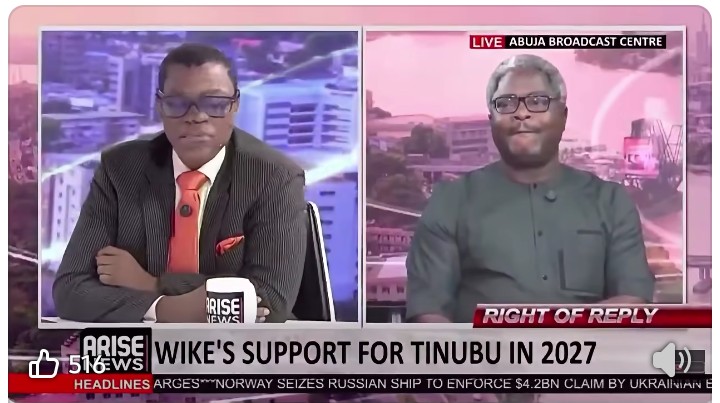

As someone who has non only spent close to four decades in journalism and broadcasting, but as a broadcast journalism trainer, I want to approach this matter from neither a political nor a personal standpoint, but strictly from the perspective of professional broadcast practice and editorial control. And from that perspective, I have absolutely no difficulty supporting the decision taken by ARISE TV to bring the interview to an end.
Let us establish something first. A guest has rights. A guest has the right to decline an invitation to appear on a programme. A guest has the right to refuse to answer a particular question. A guest may even say, before appearing on the programme, that there are certain conditions under which he is prepared to participate.

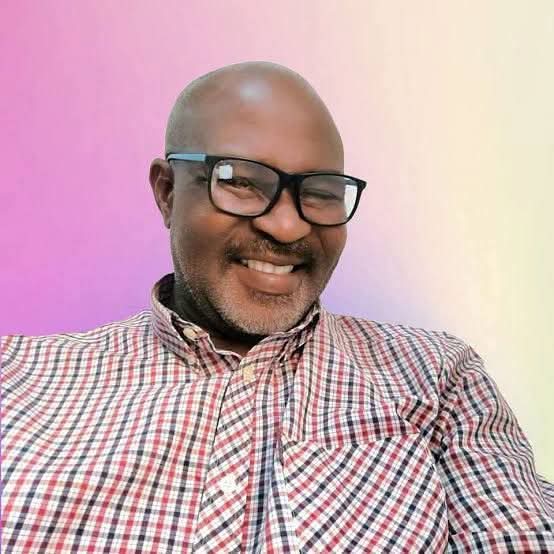
Broadcast Journalist, Babs Daramola
For example, if Mr Olayinka had told the producer before the programme: “I am willing to appear on The Morning Show, but I will not take questions from Rufai Oseni.”The producer would then have had a choice. ARISE could have accepted that condition and made the necessary editorial arrangements.
Or ARISE could have said: “That is not how we want to conduct the interview, so we will not proceed with the appearance.” Either position would be professionally understandable.
What a guest cannot do, however, is accept an invitation to a programme and then, in the middle of the interview, introduce a new condition that fundamentally changes the agreed editorial format. That is where the issue of editorial control comes in. And this is not peculiar to Nigeria.
The BBC’s Editorial Guidelines expressly recognise that contributors sometimes attempt to impose conditions on broadcasters. Its position is unequivocal: the broadcaster must not surrender editorial control. The guidelines state that interview arrangements must allow the broadcaster to ask questions the audience would reasonably expect, and where a contributor insists on unacceptable conditions, the broadcaster should consider withdrawing from the interview. That principle is at the heart of professional broadcasting.
The guest does not own the programme. The guest does not determine the programme’s editorial format. The guest does not appoint the interviewers. And the guest certainly does not have the unilateral authority to decide, after appearing on a programme with three anchors, that one of those anchors is no longer permitted to ask questions.
From what happened on the show, Lere Olayinka had already answered questions from two of the anchors, Reuben Abati and Ayo Mairo-Ese. When it became Rufai Oseni’s turn, he declined to answer questions from Rufai. That is a very important distinction. He was not merely saying: “I don’t want to answer this particular question.” He was saying, in effect: “I will not answer questions from this particular anchor.” That is his prerogative as a personal decision. But it is not his prerogative to impose that decision on the programme. And this is precisely why I believe Ayo Mairo-Ese was right to bring the interview to an end. She was not ending The Morning Show. She was ending the interview because the interviewee had made it impossible to continue in the format under which the programme had invited him.
She reminded him that there were three anchors on the programme and that he had come on knowing that. She then told Lere that the programme would be happy to have him back when he was ready to engage all three presenters. That is a professionally handled. editorial control. And I would defend that decision as a broadcast professional. And, in fact, no broadcast profession who knows their onion would not defend this position.
The Society of Professional Journalists’ ethical framework similarly emphasises that journalists must act independently and resist external pressure that could compromise their professional independence.
So, to those saying, “Olayinka has a right to choose who asks him questions,” I would say: Yes, he had the right to make that preference known before the interview. He had the right to say: “I don’t want to appear on a programme where Rufai Oseni will interview me.” And ARISE would then decide whether it was willing to accommodate that request.
But he did not have the professional right to walk into a three-anchor programme, wait until Rufai’s turn to ask questions, and then attempt to change the rules of the engagement. You cannot change the rules in the middle of the game.
And then came the statement about wanting the conversation to be among “reasonable human beings.” I will be very careful here.
Lere was entitled to be unhappy with Rufai. He was entitled to object to something Rufai had previously said. He was entitled to refuse to answer Rufai. But once he characterised the people on the other side of the microphone as people who were not “reasonable human beings,” the situation had moved beyond a simple refusal to answer a question. That was an affront to the professionalism of the people conducting the programme and, by extension, an affront to the editorial platform that had invited him. At that point, ARISE had every reason to say: Thank you very much. The interview is over.
And I commend them for doing precisely that rather than descending into an unnecessary on-air confrontation. That, in my view, was the professional response.
And I find it rather amusing that some of the loudest voices defending Lere’s conduct appear to be approaching the matter entirely from the perspective of personal likes and dislikes.
You may dislike Rufai Oseni. You may think Rufai is too aggressive. You may think Rufai asks uncomfortable questions. You may even decide that you personally would never sit down for an interview with him. Fine. But none of those things changes the professional principle of editorial control.
A broadcast interview is not a negotiated press conference in which the guest gets to select which journalist is worthy of asking questions after the interview has begun. The guest controls his answers. The broadcaster controls its programme. That distinction is fundamental.
So, professionally speaking, I have no quarrel with Lere Olayinka deciding that he did not want to answer Rufai’s questions. He was entitled to make that personal choice. But ARISE TV was equally entitled to say: “Then this interview cannot continue.” And I believe that was exactly the right editorial decision.
But if we are going to discuss this matter as a question of professional broadcasting standards, then we must discuss it professionally.
And on that principle, ARISE TV got it right.
✍️ Babs Daramola a journalist and consultant.
Credit: Star Voice Media