COLUMNIST
Saraki never a rubber stamp Senate President

Saraki never a rubber stamp Senate President
By Aninze Ekene Esq.
Whenever you hear Saraki say he was never a rubber stamp that accepted everything from the executive arm, believe him, because under his Senate leadership was the last independent Senate arm.
In 2015 general elections, the All Progressives Congress (APC) won the majority in the Senate.
However, the party became deeply divided over who should lead the Senate.
The APC hierarchy preferred Senator Ahmed Lawan as Senate President.
But in a tactical political maneuver, Dr. Saraki outsmarted the party and aligned himself with the opposition Peoples Democratic Party (PDP).
On June 9, 2015, while many APC lawmakers were absent, with some attending a reconciliatory meeting with the President, the Clerk of the National Assembly convened the Senate Plenary.
With just 57 senators present, Saraki was nominated by Senator Sani Yerima and seconded by Senator Dino Melaye.
He was subsequently elected unopposed as Senate President.

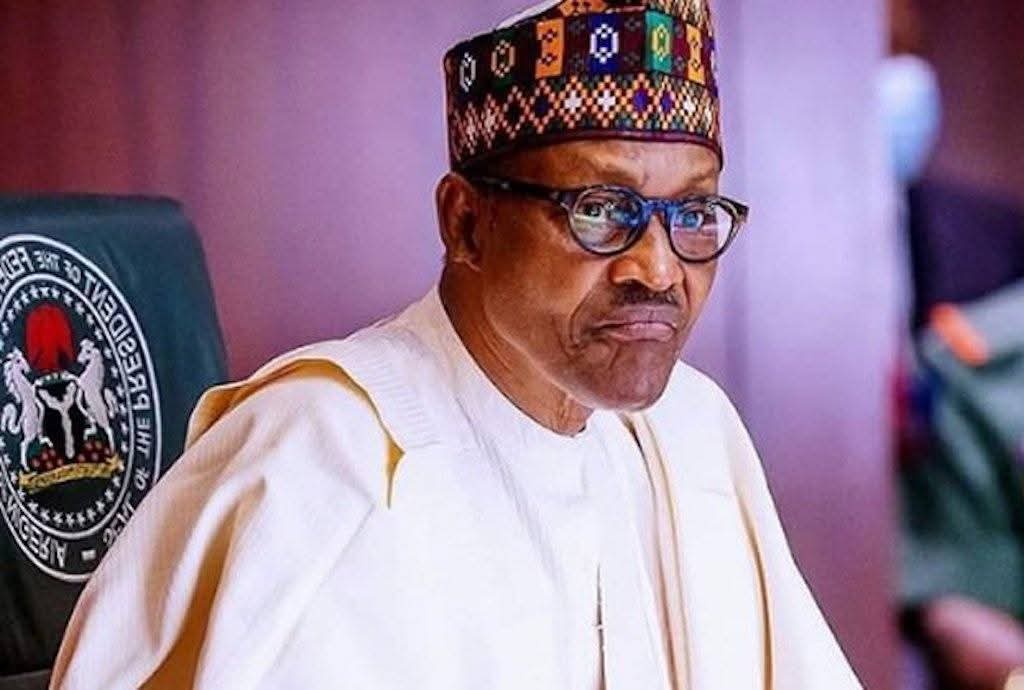
President Muhammad Buhari
From that moment, the battle line was drawn between the Buhari-led executive arm and the Saraki-led Senate.
Several attempts were made to remove Saraki as Senate President.
But Section 50(2)(c) of the Constitution would never allow it.
Because while Saraki only needed a simple majority to emerge as Senate President, removing him required a two-thirds majority of the Senate.
That constitutional protection stood firmly in his favour.
As Senate President, Saraki rejected several bills and resisted what he considered unnecessary encroachment by the executive arm.
When the Buhari-led administration recommended Ibrahim Magu as EFCC Chairman, the Saraki-led Senate repeatedly rejected his nomination as Chairman of the Economic and Financial Crimes Commission (EFCC).

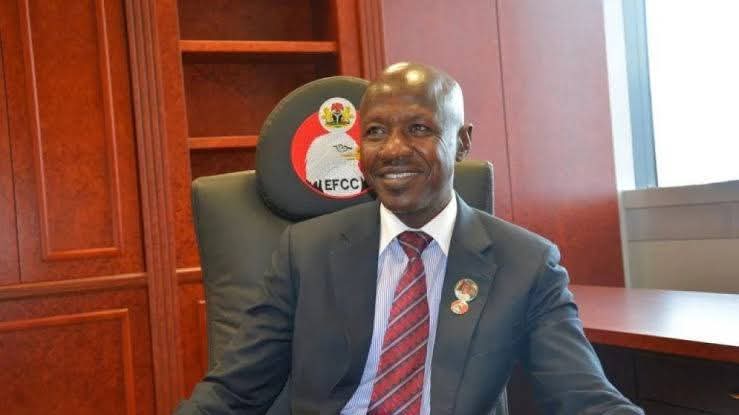
Former EFCC Chairman, Ibrahim Magu
Their reasons was that Ibrahim Magu had adverse security reports from the Department of State Services (DSS), even though Buhari’s government unconstitutionally retained him in an acting capacity.
In 2016, President Buhari submitted a massive $29.96 billion external borrowing plan for infrastructural development.
The Saraki Senate promptly rejected the request, citing the absence of technical details, a clear repayment plan, and specific information on the projects the loan was meant to fund.
On April 11, 2017, the Buhari-led executive aggressively pushed the controversial National Water Resources Bill, which sought to bring all trans-boundary water resources under federal control.
The Saraki-led Senate blocked the executive’s move, aligning with widespread public opinion that the bill infringed on states’ rights and existing land tenure systems.
When President Buhari withdrew $1 billion from the Excess Crude Account (ECA) to purchase military equipment without prior appropriation by the National Assembly, the Saraki-led Senate openly criticized the action as unconstitutional.
That was something you will hardly find in today’s National Assembly.
In 2017, the National Assembly published its budget. It was the first time such disclosure had been made since 2010, when former Senate President David Mark blocked its publication.
Even though President Buhari set a record by withholding assent to more than 30 bills passed by the 8th National Assembly under Saraki, the Senate did not back down.
Instead, it initiated procedures to reconsider, amend, or even override the President’s veto on key pieces of legislation, including the Electoral Act Amendment Bill, the Industrial Development (Income Tax Relief) Amendment Bill, and the Petroleum Industry Governance Bill (PIGB).
By the time Saraki was preparing to leave office, the 8th Senate had passed 293 bills, surpassing the combined records of several previous Senates since Nigeria’s return to democratic rule.
The 7th Senate passed 128 bills, the 6th Senate passed 72 bills, while the 4th Senate passed 129 bills.
Whether one agreed with Saraki’s politics or not, one fact remains difficult to dispute:
The Senate under his leadership demonstrated a level of independence that many Nigerians believe has not been seen since.
The question now is this: as the 10th National Assembly prepares to leave office next year, what exactly are the independent moves it will be remembered for?
I am Ekene Aninze Esq.