COLUMNIST
WIKE, ANOTHER GLASS IS OFF THE TABLE

WIKE, ANOTHER GLASS IS OFF THE TABLE
By Oraye St. Franklin
There is something about death that politics cannot negotiate.
It recognises no faction, fears no political structure and respects neither office nor influence. When it comes, another chair at life’s table becomes empty. For Nyesom Wike, another glass has just been taken off that table.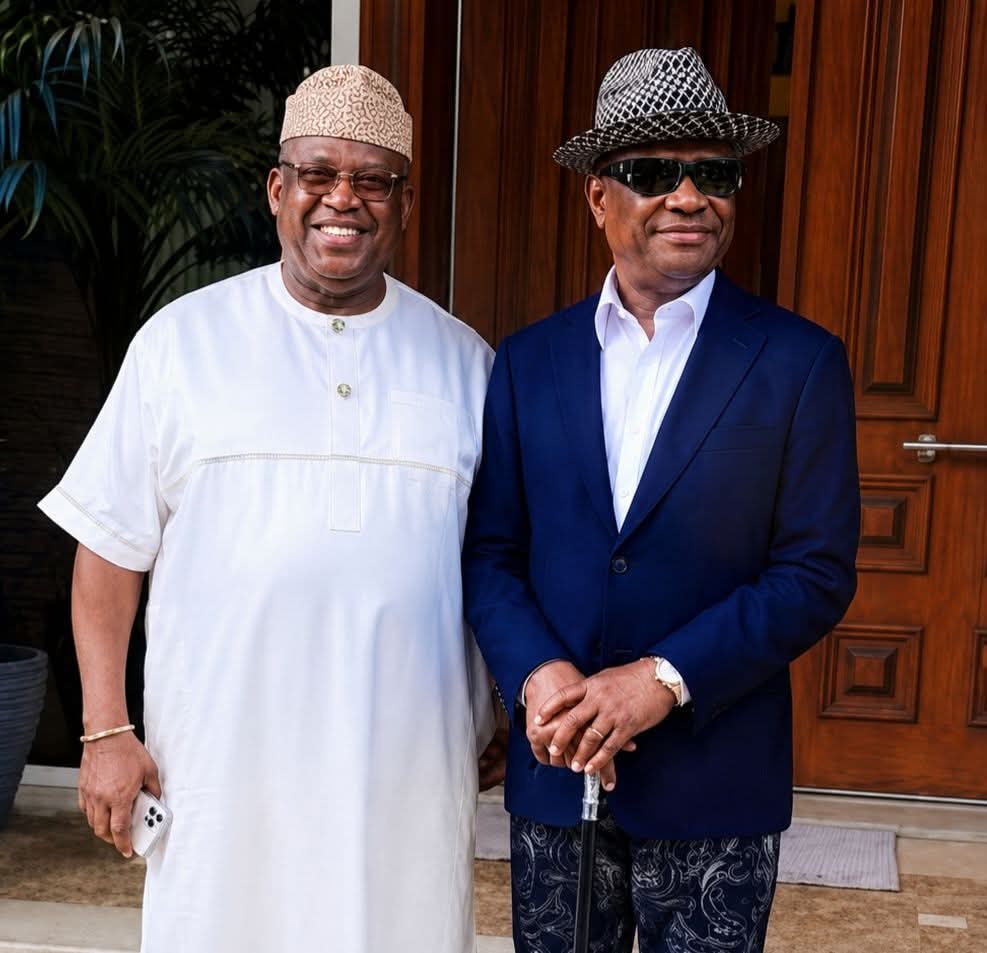

Chief Dan Orbih was not merely another PDP politician known to Wike. He was a friend, political ally and fellow traveller through some of the most consequential battles of Wike’s political career.
Their relationship travelled back to the years when the political ground beneath Rivers State was shifting dramatically.
As Wike broke ranks with then Governor Rotimi Amaechi, control of the Rivers PDP became central to the struggle. Godspower Ake, an Amaechi ally, lost control of the party structure following a controversial court battle, while Felix Obuah emerged as chairman. Orbih was among the influential South-South PDP figures involved in the political process surrounding the recognition of the new leadership. Dan in that instant was both in Edo and Rivers at the same time. Thanks to the now normative dramatic arithmetic of Nigerian politics.
What followed changed Rivers politics and left it serverely damaged to this day.
Amaechi eventually left the PDP. Wike consolidated his position within the party, secured its governorship ticket and emerged governor after the fiercely contested 2015 election.
Through the years that followed, Orbih remained close.
When Wike’s battles moved beyond Rivers State into the national struggle for the soul of the PDP, Orbih was again in his corner. During the disputes within the Edo PDP and later the wider South-South structure of the party, the two men remained political companions.
Only last year, Orbih publicly described Wike as his “very dependable, hard-working friend” and insisted that nobody in the PDP could dictate whom he could call a friend.
Wike’s tribute following Orbih’s death therefore carried the weight of a relationship forged through years of political warfare.
“I have lost a friend and a committed political ally,” he said, describing Orbih as “a friend indeed.”
Those words should be allowed to breathe. Because another chair is empty.
The Table Is Getting Smaller
Only months ago, Wike was mourning Senator Barinada Mpigi, another longstanding political ally who died in February 2026 at 64.
Wike led a Rivers delegation to visit Mpigi’s family in London. He remembered him as a dependable ally who stood with his friends through thick and thin.
Now Orbih is gone too, also at 64.
There is no connection between these deaths beyond the ordinary and painful reality of human mortality. But there is a lesson in their proximity.
The table is getting smaller.
Men who fought political battles with Wike are becoming memories. Men who attended strategy meetings, defended positions, challenged opponents and celebrated victories are becoming subjects of condolence statements.
Perhaps there comes a time in every powerful man’s life when the departure of his friends should cause him to look beyond the next political battle.
For Wike, that time should be now.
He has been extraordinarily successful at acquiring and exercising political power. From local government chairman to Chief of Staff, minister, two-term governor and now FCT Minister, his political journey has been remarkable.
But his politics has also been needlessly combative. Too many relationships have ended in bitter political warfare. Rotimi Amaechi was once an ally. Uche Secondus was once an ally. Peter Odili was once publicly revered as his political father. Siminalayi Fubara was Wike’s own chosen successor. Each relationship eventually descended into serious political conflict.
There must come a point when a man who has fought so many former friends asks himself why yesterday’s allies so frequently become today’s enemies. Power should eventually teach restraint.
Time Is Speaking
This death is not an occasion to mock Wike. He has lost a friend, and that deserves genuine sympathy.
My condolences go to the Orbih family and to everyone who knew and loved Dan Orbih. I also commiserate with Wike over the loss of someone who stood beside him through consequential years of his political life.
But this grief should also serve as a mirror.
Wike is still here. He still has influence. He still commands enormous political attention. Most importantly, he still has time.
Time to mend relationships that politics has damaged. Time to understand that disagreement does not require destruction. Time to allow institutions to function without every contest becoming a test of personal loyalty. Time to recognise that a successor need not remain a subordinate. Time to use power with greater restraint. And perhaps time to understand that winning political battles is not necessarily the same thing as building a good political legacy.
Dan Orbih’s glass is off the table. Mpigi is gone too. We don’t need to name more.
One day, inevitably, somebody will write about the rest of us in the past tense. The offices we occupied and the battles we won will matter considerably less than the people we helped, the relationships we preserved and what our exercise of power did to society. Port Harcourt has been severely damaged by Wike’s politics. It is not even a shadow of itself because it is completely shadowless.
Wike still has an opportunity to decide what will be said of him. Another friend is gone. Another chair is empty. Another glass is off the table. Time is speaking. Wike will do himself some good to listen.