
HEALTH
Where Healthcare Meets Hope: The Lasting Legacy of the Ikot Ekpene Udo General Hospital

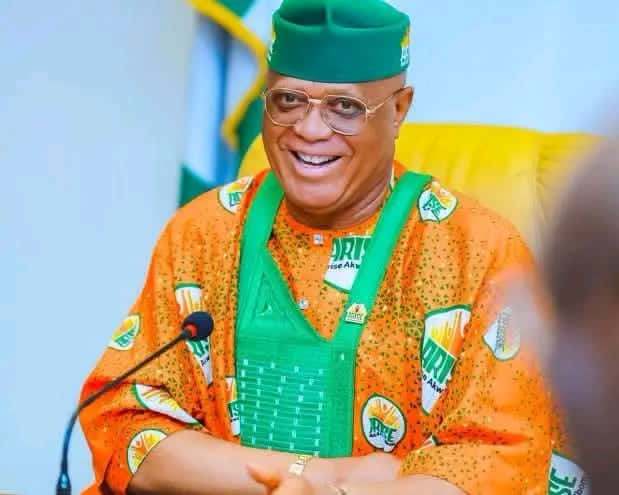
Where Healthcare Meets Hope: The Lasting Legacy of the Ikot Ekpene Udo General Hospital
By Lucy Daniel
”A hospital heals today’s patients; a teaching hospital and medical school heal generations.”
Few statements better capture the significance of the General Hospital project at Ikot Ekpene Udo in Nsit Ubium Local Government. Conceived by the administration of Governor Pastor Umo Bassey Eno, PhD, under the ARISE Agenda, the project is far more than another public health facility. It is a strategic investment in human capital, economic prosperity and the future of Akwa Ibom State.
Occupying over 8.073 hectares with nearly 9,900 square metres of built-up space, the integrated complex combines a modern General Hospital with Schools of Nursing, Health Technology and Biomedical Engineering, alongside hostels, staff quarters, utility infrastructure, restaurants and other support facilities. This deliberate integration reflects a development philosophy that understands a simple truth: healthcare and education are inseparable pillars of sustainable development.
Around the world, the most successful healthcare systems are anchored on institutions that combine patient care with education, research and innovation. Countries such as Singapore, Germany, Canada and the United Kingdom have demonstrated that teaching hospitals produce better healthcare professionals, encourage medical innovation and improve patient outcomes. Rather than building isolated facilities, they create centres of excellence that continually renew themselves through learning and professional development.
Akwa Ibom is embracing that same forward-looking model. By integrating professional schools into the hospital complex, the state is investing not only in treating illnesses today but also in preparing the next generation of nurses, health technologists and biomedical engineers who will strengthen healthcare delivery for decades to come.
The economic implications of this project are equally profound. During construction, it provides employment for engineers, architects, artisans, technicians, suppliers, transport operators, food vendors and numerous small businesses. Upon completion, it will create permanent opportunities for doctors, nurses, pharmacists, laboratory scientists, biomedical engineers, lecturers, administrators, hostel managers, caterers, cleaners, security personnel and maintenance workers. Beyond direct employment, the project will stimulate commerce, housing, transportation and other support services within Nsit Ubium and neighbouring communities.
For the youth, this project represents more than jobs; it offers careers and hope. Thousands of young people who aspire to work in the healthcare sector will have greater access to quality professional education without leaving the state. By equipping them with globally relevant skills, the institutions within the complex will produce graduates capable of contributing both to Nigeria’s healthcare system and the international medical workforce.
Women also stand to benefit significantly. Nursing and allied health professions have long been among the most reliable pathways to professional advancement and financial independence for women. Expanding access to quality health education will empower women more economically, strengthen families and improve community wellbeing.
At the heart of this project lies a timeless principle:
”A government’s finest legacy is not the monuments it erects, but the institutions it builds that continue to save lives, educate citizens and create opportunities long after political tenures have ended.”
This is precisely why the Ikot Ekpene Udo General Hospital deserves national attention. It is not simply another construction project; it is an institution designed to outlive political cycles. Long after the ribbon-cutting ceremonies have ended, patients will continue to receive quality healthcare, students will continue to acquire professional skills, researchers will continue to innovate, and families will continue to benefit from the opportunities it creates.
The project also reflects one of the defining principles of the ARISE Agenda: development must be inclusive and people-centred. Locating such a comprehensive healthcare and educational facility in a rural community demonstrates a commitment to balanced development. It reduces the rural-urban divide, improves access to quality healthcare and education, and ensures that economic growth extends beyond major cities.
Healthcare should never be viewed merely as a social service; it is a powerful economic investment. Healthy citizens are more productive, businesses experience fewer disruptions, families spend less on avoidable illnesses, and investors are more confident in environments where quality healthcare is readily available. Every investment in healthcare yields returns through improved productivity, enhanced human capital and stronger economic resilience.
This integrated model is one from which other states in Nigeria can learn. Instead of pursuing fragmented projects that address only one challenge at a time, governments should build institutions that simultaneously deliver healthcare, education, employment and economic growth. That is the hallmark of strategic governance.
As Akwa Ibom continues implementing the ARISE Agenda, projects such as the Ikot Ekpene Udo General Hospital illustrate that visionary leadership is measured not merely by the number of projects executed, but by the enduring value they create for society. Institutions that heal, educate and create opportunities become lasting monuments to good governance.
Ultimately, democratic leadership is judged by performance. Leaders who consistently invest in people, strengthen institutions and expand opportunities earn the trust and confidence of the electorate through measurable results. For many, the Ikot Ekpene Udo General Hospital is another compelling example of why Governor Pastor Umo Bassey Eno, PhD, has built a strong case for a second term, not simply to continue projects, but to consolidate a governance philosophy that places people, institutions and sustainable development at the heart of public service.
#UmoEno #ARISEAgenda #AkwaIbomRising #Healthcare #Education #RuralDevelopment #HumanCapital #SecondTerm #GoodGovernance
Daniel, SA to the Governor on Media
Writes from Uyo Akwa Ibom State
providencemaga@yahoo.com